Feeds:
Posts
Comments

Posts Tagged ‘Spain’

In the late 18th Century, Antoine-Francois de Fourcroy, physician to Napoleon Bonaparte, distilled and combined mandarins from China, local herbs and spices, and aged cognacs to create the alleged “favorite liquor” of the Emperor. Today, however, the mandarins are sourced a bit closer to home in Sicily and Valencia and Manarine Napoleon sells all over the world. And of course, like any respectable digestivo, the recipe remains a closely guarded secret.

Interestingly enough, it was during dinner at the annoyingly inventive (but outstandingly situated) Akelare restaurant outside of San Sebastian, and not in Biarritz, where I ended up trying Mandarine for the first time. As opposed to the Italian version which can be flat, the addition of cognac to this digestivo gives it a bit more body and texture, blending nicely with the macerated fruit. I don’t think I could drink glass after glass of the stuff, but Mandarine definitely does the trick after a long meal.

I must also note the spectacular way in which this digestivo was served.  By placing the snifter in a bowl of ice, the liquid remains pleasurably cold without getting diluted by the melting ice water. This was the first time il digestivatore has ever seen a digestivo served in such a manner. Absolutely brilliant!

Famous Drinker: Napoleon


Overall Rating: ★★★☆☆


Update! check out the old bottle I just found during a recent visit to a fantanstic digestivi collection in London; I definitely like it better.
(more…)

Read Full Post »

Orujo

This post was graciously written by Il Digestivo’s chief digestivo correspondent, Il Dottore, after his recent visit to Spain. Enjoy.

The Spaniards don’t do after dinner drinks quite as well or as often as their neighbors to the north/east.  In Spain, the most common digestive to see at the bar was Fernet Branca, although I never saw it ordered by a Spaniard.

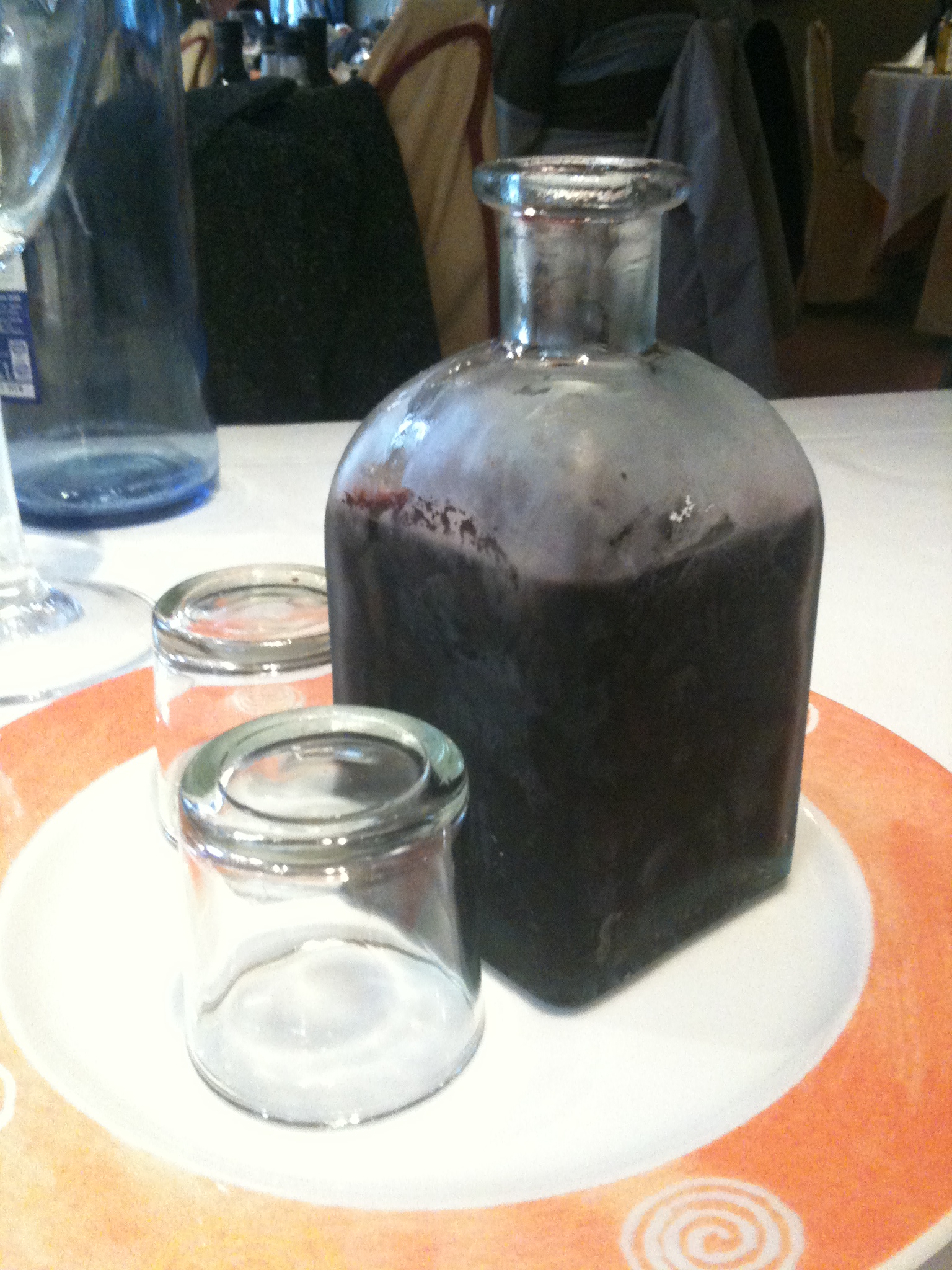
My first glimpse at what might be an after dinner drink culture came in the form of a blackberry cordial that we were served (without ordering it) after a large midday paella meal in Madrid.  It was sweet, not bitter at all, and was served chilled.  A nice way to end a meal.

My next encounter with an after dinner beverage was at Commerce 24 (http://comerc24.com.mialias.net/) in Barcelona, a trendy nouveau cuisine spot with an apparently celebrity chef.  I asked for an after dinner drink and their dessert menu actually included a few grappa choices.  It also included several “Orujo” selections.

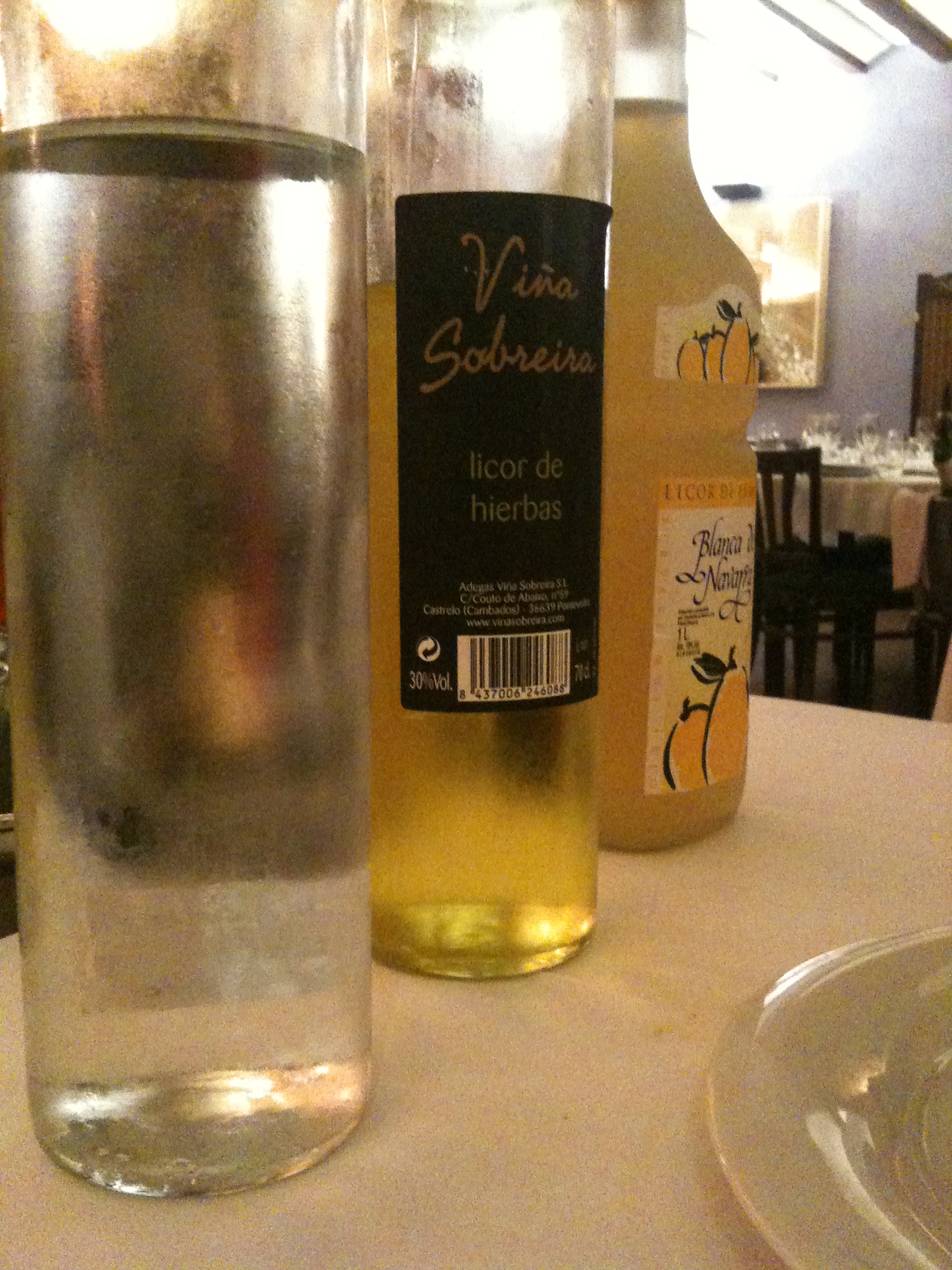
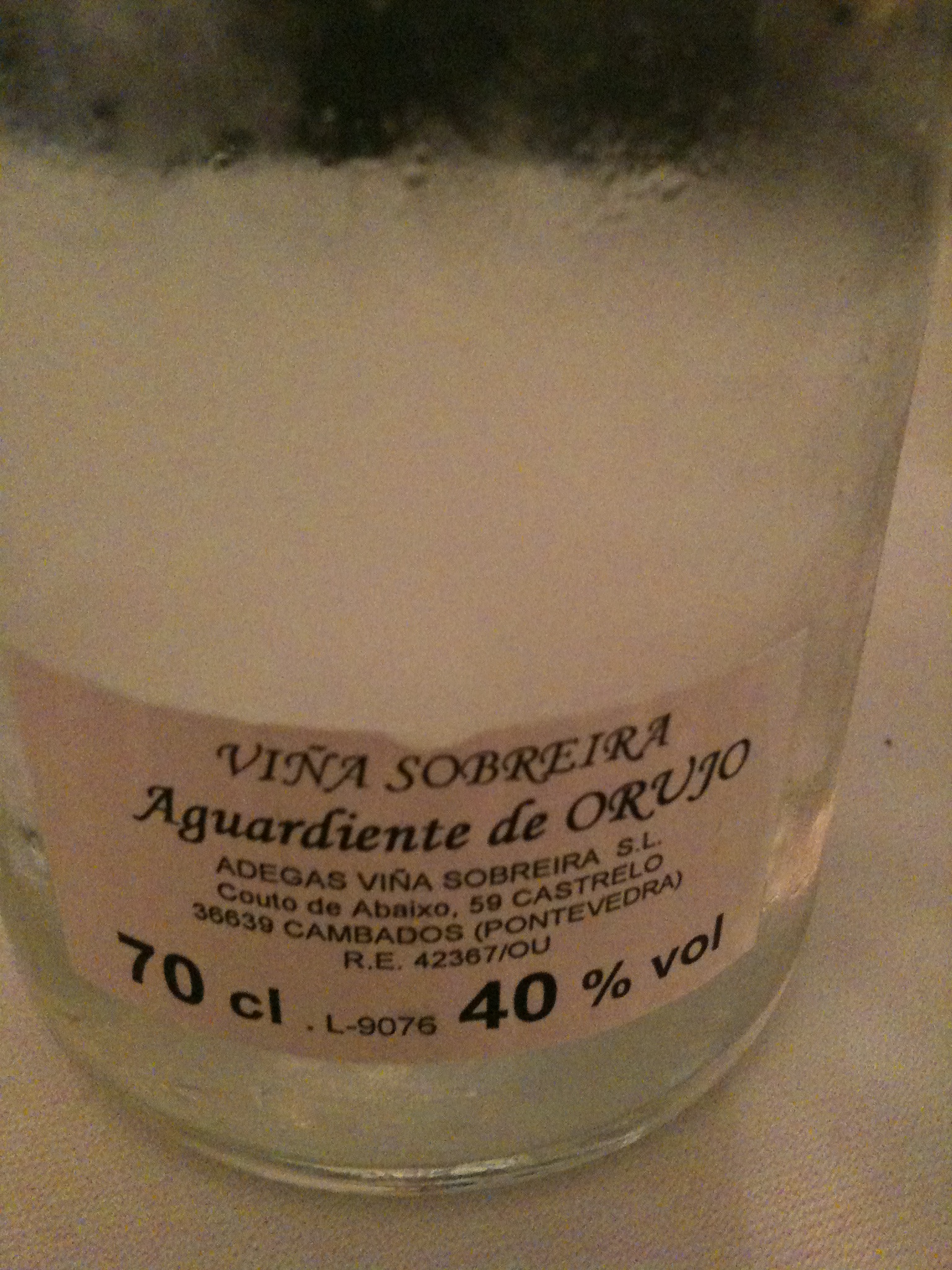
We received a generous pour of a yellow-colored and a crystal clear Orujo which the wine steward recommended I try.  This beverage is apparently more popular in northwest Spain, particularly in Galicia.  According to this man, Orujo is made from the last press of a grape and is a very alcoholic spirit.  To me, the clear Orujo de Galicia tasted more like a higher alcohol saki actually.  The yellow one was decidedly more refreshing given it’s herbal character.

The next night in Barcelona, we stumbled into another extraordinary dining experience, a restaurant called Passadis Del Pep (http://www.passadis.com/cat/index.htm), where there are no menus and they just bring out plates of clams, snails, ham, and shellfish you have never seen before.  Alongside unlimited cava (champagne), this felt like the quintessential Spanish dining experience.

At the end of the meal they just brought over three bottles of orujo.  They just let you pour as much of whatever you wanted, it was fabulous.  The yellow bottle had a delightful herbal character, very refreshing.  They served these digestivos chilled.

Our last encounter with orujo was at our favorite bar back in Mardid on the last night of the trip.  Yet another refreshing herbal orujo, here served on the rocks in a snifter.

Read Full Post »